http://www.military-school.org/blog

Archive for the ‘Military’ Category

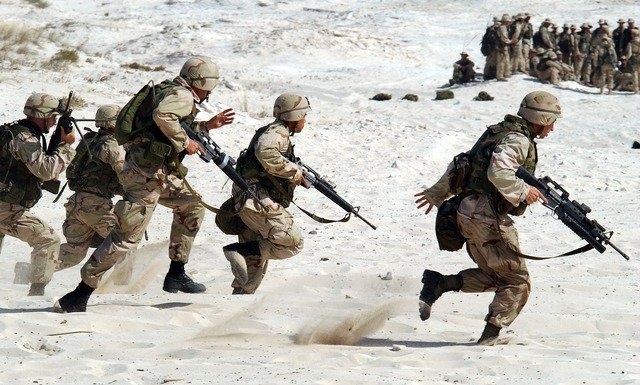
The military is the pride of the nation. It is the direct reflection of how progressive a country and it’s growth on the global economic scenario. A respective armed force, projects a healthy country. This is the main reason why a military institution of a certain country must hold on to its core values and objectives.

The United States is considered to be one of the super powers of the world. Not only do they excel in commercial and industrial aspects but also— their military units show dominance by the virtue of honor, loyalty, and service.

Recently, the US Armed Forces helped Japan in recovering from the tragic tsunami disaster. American troops showed empathy and cooperation with their number ally. This makes the United States military forces known worldwide and being respected by neighboring countries. What makes them exemplary to other military forces worldwide?

Loyalty

“Bear true faith and allegiance to the United States constitution, the Army, your unit, and the other soldiers”. Loyalty is the greatest virtue ever existed. It is a product of faith, trust, and obedience. Soldiers are ordered not to disclose any information to the enemy even if it costs their life. Loyalty in the army is observed by respecting the national constitution, obeying their superiors without much question, and showing patriotism even in the present day.

Duty

“Fulfill your obligations”. The army is trained to be responsible individuals. What they are tasked to do, they must fulfill it whole heart knowing it is for the good of everybody. They must come home successful with their operations because they know not failure. It is their main duty to protect, therefore, no citizen of their country must be in danger. Duty is not just something to be taken easily; it should be put to the mind and soul. Early on their military education, cadets are trained to fix their bed, and do their daily routines. It is their duty to fulfill, and they find joy in every accomplishment.

Respect

“Treat people as should they be treated” Every individual must be give the deserving treatment. The military is a respective place to be in participation, and being respectable means giving due to colleagues, cadets, superiors, and even civilians. Respect without discrimination, respect even he is white or black, Asian, European, or American.

Selfless-Service

“Put the welfare of the nation, the army, and your subordinates before your own”. In every situation, dilemma, catastrophe, natural disaster, and wars; military men will always look first at the welfare of their people. It is mostly observed in Indiana military schools and the parts of the United States. Cadets are taught to put their interests back at hand and primarily serve their country and their people.

Honor

“Live up to all the Army values”. Being honorable is highly appreciated in the army. No matter what happens, a soldier must not compromise his honor and must maintain it on the pedestal for people to see. Honor is earned by living up to the goals and values of the military institution—and primarily rewarded by medals. It is something that can’t be taken away and must be protected.

Integrity

“Do what’s right, legally and morally”. Supervision is common in most military schools for boys in Texas and Mississippi. Of course, as young cadets they will be monitored. But when they become soldiers and officers in the army, they will be acting on their own supervision and must act accordingly to military values—integrity. With or without someone watching them, they are obliged to do what is morally and legally right.

The military spending slowed down since the 2001 fiscal year as the global recession penetrated the defense sector.

The global military spending made an increase of only 3 percent in the fiscal year 2011 rising from $US 1.63 million to $A 1.55 trillion according to the Stockholm International Peace Research Institute.

The United States slowed down its military spending and military investments last 2010 but still ranks number one in defense spender countries. The US military spending grew from $US 19.6 billion into $ A 19.55 billion dollars last 2010.

China and United Sates are reported to be in rivalry with military spending, however, China ranked below the United States according to the SIPRI military expenditure project.

Surprisingly, South America had the fastest growth in military facilities and military spending last year— even though the country had less military threats from the other countries. The numbers were high – with an increase of 5.8 percent in defense expenditures.

In Europe, the spending rate fell down because of the cut downs in order to cope up with the dreadful economy. Approximately over 2.8 percent of overall European military spending was cut —which was considered to be heavy in more vulnerable economies of Greece and Eastern Europe.

Asia had the weakest spending rate —with only 1.4 percent increases in 2009. China was making history for Asian countries as it leads with an estimated budget of $US 119 billion in military spending last 2010.

Middle Eastern countries had an increase of 2.5 percent in 2009 with spending up to $US 11 billion. Saudi Arabia made the greatest military spending of all the countries in the Middle East.

African countries sow and increase of 5.2 percent in military spending led by primary oil producers, Angola, Algeria, and Nigeria.

Military Spending and the Society

It is significant to know that the rate of military spending has a direct effect on the society. High military spending must mean greater effort in protecting countries over possible threats and a great threat to world stability.

Since the whole world is under recession it is crucial to designate more budget for other needs before military necessities, however, that would depend primarily on the peace issues of the country and it’s counterparts. There is more spending for artillery and military forces compared to all areas in the society – especially the world is getting less safe and terrorist’s threats are prevalent.

With the on-going wars and Afghanistan, Libya, and other parts of the world — there is a big pull for military spending into other designated needs in the society such as education. Military schools in Virginia and the US are making ways of teaching students for a less violent society.

Other schools in the world are stressing the global peace issue. Girls military schools and other minority schools enforcing peace volunteerism in the society.

Children of military personnel are mostly suffering the inconvenience of transferring from state to state. Every time the military server is assigned to a different country, their children will have to move also. They will need to adapt into a new environment as well new set of friends. What’s more difficult is they have to cope with some education issues.

When a student transfers from school to school with a different state, he will need to cope up with the requirements of the respective state which could be different from the previous state. This could be very inconvenient especially when students will be required for additional credit hours by the school district. What could be the solution to such dilemma?

The Interstate Compact on Educational Opportunity for Military Children is the solution created by the federal government. The Interstate Compact is a powerful tool which ensures full cooperation from state-to-state for quick actions. The ICEOMC is an agreement among member states that they will address school transition issues for military children in a consistent manner.

Fro example, a military child was about to graduate – but eventually his father was assigned to another country so they have to move. The student has to transfer, but the problem is the school to be transferred requires higher requirements and so the student lacks the credit hours to proceed into graduation and must take additional hours to cope up.

But because both states belong in the Interstate Compact, a negotiation was made and the student can now graduate on time without additional time of study.

However, negotiations can only run among member states and the compact has limitations appertaining to enrollment, Course waivers, Exit Exams and etc. You can check the American Association of School Administrators for more details.

How does the Interstate Compact works?

Each member state is obliged to establish a State Council and appoint a state military education liaison which will support military families and aid in the implementation of the compact. Each member state will also appoint a state commissioner who will serve as voting member of the National Interstate Commission.

This is one of the most beneficial military policies. Children of military servers won’t have to worry about their children’s education conflict due to reassignments. There are also military policies and grants which are created for military personnel and their spouse.

There are scholarships for military children in many military boarding schools. Veterans also have various benefits like pension plans, and health benefits. Military schools in the United States often give honor to veterans by visiting them in aged homes and giving them credit during Veterans Day. Regarding the Interstate Compact on Educational Opportunity for Military Children, it has been currently improved to serve more military children in the US.

Pay Freeze — a presidential commission recommended freezing the basic military pay and housing allowance – for three years starting 2011. Will it be justifiable to just freeze up salaries of military troops who have spouse and children in various schools including expensive military boarding schools back at home?

In order to save up some budget, the presidential commission has recommended freezing temporarily the compensation categories of US military troops. This is second to the nationwide budget cuts in education. The compensation freeze would save up $7.6 billion in compensation and tax expenditures. Plus, a $ 1.6 billion in less accrual or a $9.2 billion total discretionary savings by 2015.

Currently, there have been on-going combats in Iraq and Afghanistan – which means troops won’t be so happy upon hearing such news. “There won’t be much of an appetite to freeze military compensation while our troops are immersed in Afghanistan and Iraq” according to Josh Holly – the spokesman for Republicans on the House Armed Services Committee.

The Average Salary of a Military

Median Enlisted Pay

82 percent of the military personnel are enlisted officers. The salary scales from $2,761.80 monthly or $33,141 as of 2010. The figure is for pay grade E-5, Army Sergeant, Navy petty officer 1st class, Air force staff sergeant and Marine sergeant -with years in the military. The average salary varies from $1,447.20 to $5,112.90 depending on the rank and years.

Median Officer Pay

This accounts to more than 18 percent of the armed forces servers in the US. Serving as highly trained military men, they are paid higher than enlisted troops. Median salary ranges from $6,258.60 or $75,103 annually as of 2010. The salary is for O-5 – a Navy commander and lieutenant colonel in all other branches.

Median Warrant Officer Salary

There are an estimated less than 20,000 warrant officers in the army – median warrant officers have an average salary of $4,254 monthly or $51,048 annually as of 2010.

Salaries by Specialty

Intelligence analysts receive average annual salaries of $51,362 as of 2010. IT specialists have an average pay of $41,538 each year, mechanics has an average earnings of $31,571 and members of the military police earns 433,845 yearly.

This is the average salary for the military for the fiscal year 2010. There are more expected raises as the House of the Representatives passed a defense spending bill which will enable troops to enjoy a 1.9 percent pay raise next year. While the Representatives ask for 1.4, the Senate is calling for a 1.4 salary raise – but hasn’t voted on the matter. The Congress still has to come up with an agreed defense spending till the end of the year or else, the salary will remain flat on the first month of the year.

Military schools blog question: Will it be justifiable to freeze military compensation?

American forces are marking a good reputation in aid for the disastrous Japan tsunami calamity. About 20,000 troops have been deployed to the rising sun to help out the suffering of the Japanese people.

The operation Tomodachi is considered to be the biggest humanitarian mission the US has done for their most important ally in Asia, Japan. As the management of supplies and transportation of relief goods gets improved, the US military have been targeting hard-hit spots and providing relief goods for hundreds of Japanese who were shattered by the tsunami.

People are astounded how the Americans help out Japan in these of disaster. Many Japanese near the American base are thankful for the hard work such American soldiers employ in helping them. The American soldiers have been successful in cleaning up the Sendai airport so far. To mention that Sendai have been the center of much destruction during the tsunami.

Today, the airport runways are now clean and free of mud, tossed cars, rubble, and destroyed fragments of collapsed buildings. The site has been like going back in time wherein US forces do not know where to begin cleaning. It was like an archaeological site wherein everything was mashed up.

Over 19 ships, 140 air-crafts, 18, 282 personnel were supporting the mission. They were sending barges filled with freshwater to help cool the broken nuclear power plant which has been expected to explode anytime if not cooled. US fighter planes are also helping the Japanese authorities in search for survivors while two of its air-crafts are helping in monitoring the nuclear power plant.

And over 500 of US Soldiers have been giving blankets and supplies as well as support in refueling military helicopter for smoother operations.

The 2011 Sendai Earthquake and Tsunami

A magnitude of 9 quaked off Japan’s Northeast coast Friday, March 11 which triggered a huge tsunami resulting to humanitarian damages, and about 18,000 people killed. Chile and New Zealand also suffered massive devastation brought by the shaking of the earth. These regions are belonging to the Pacific Ring of Fire and are expected to experience such inconveniences.

The US Armed Forces

These are military forces trained in the United States in many of its military schools and academy. Recently, these brave men are sent to Japan to help out Japanese brothers in search, rescue, and support.

As part of the mission and virtues of the US Armed Forces, they have been obliged to help out those who are in need, specially their allied countries. Such principle is taught in most military schools in the United States as well as other countries. As of now, there has been visible progress in the continuing effort of American-Japanese rescue operations.

Have you seen obese people in the military or in any military schools? I bet you won’t find one even how hard you search the area? Why can’t these people get fat? Are they taking any slimming supplements? Or maybe they are not sleeping at all? Definitely no, will find out what is the secret of the military in staying fit.

  1. They run like there is no tomorrow – of course they do rest and they run in flocks. And before you can even step into a military academy, you must first score high or at least pass the real-world physical exam. Air force aspirants should run 1.5 miles, and 3 miles for marines. Now you should start running now if you want to be in the armed forces.
  2. They hate couch potatoes – for all we know, standing is very normal in the military. Have you noticed the British guards? They won’t move unless they are told to. Can you imagine standing for such long hours? Military schools don’t impose these of course. Sitting for 30 minutes burns 33 to 63 calories (for 110-lb. up to 216-lb individuals) while standing for 30 minutes burns 39 to 78 calories.
  3. They like to move it – The officers aren’t that friendly to exempt anyone from military drills. Marching exercises are rigid and tremendous. You don’t even have the right to scratch your back during those times.
  4. They eat right and sleep right – the military and army schools train cadets to sleep early and wake up early. It has been found out that obesity and malnutrition is due to stress, improper diet, and lack of sleep.
  5. They are punished in a healthy way – trespasses and breaking of rules have corresponding punishments such as push ups, and marching until they get tired.
  6. Definitely no video games allowed – sedimentary video games have been known a big factor in today’s obese society.
  7. Whether you like it or not, you will be involved in sports – the military institutions are usually jocks in terms of sports. They are often champions in football, basketball, running, diving, and other rigorous sports.
  8. They are awesome performers – whether in singing, playing an instrument, or dancing; military people are best at it. Dancing alone is a good outlet for getting fit and —believe us, these dudes have a lot of it to show.

The stuff above is basically just a tip of the iceberg these military people are doping “everyday”. Mentioning the sweat and physical rigidness of all these activities is definitely draining to the bones. This is the biggest idea why military people and students in most army schools succeed not only with life but as well maintain a life full of challenge and vitality.

Military schools – for all we know, the Marines own line of language which can be very hilarious to hear but has useful meanings – especially for the rest of the crew. These jargons are built as stealth for the enemies, and for easier and more organized communication among fellow Marines. Not just Marines have these jargons but also the armed forces of every nation.

Many of these jargons are incorporated in to military boarding school drills. They might be fun to hear but they enforce an “obey now, ask later” policy. Anyways, let’s look at some funny Marine jargons that they use and compare it with the layman’s meaning.

  • Banana Wars – It is a collective name for the military into the Caribbean and South American countries. (Not a fight game using bananas)
  • Jarhead – non derogatory term for a Marine.
  • Skate – to skate is not work when one should be working. ( it’s far way different from the equipment that is worn on the feet to enable the wearer to glide along and to be propelled by the alternate actions of the legs)
  • Squid – a derogatory term for sailors (Widely distributed fast-moving ten-armed cephalopod mollusk having a long tapered body with triangular tail fins)
  • D.I. – drill instructor ( they can also dance, they don’t teach one)
  • Brig Rat – A resident of the jails of the Marines ( don’t think of a 2,200 pounds long-tailed rodents similar to but larger than a mouse, oh it’s brig not big)
  • Born Again Hard – compliments given to a civilian who has been transformed into a Marine. (We bet you thought of reincarnation or something)
  • Belay – to immediately cease what’s currently been done. (Shouldn’t it be more appropriate if we wrote it the right way? Delay? Anyways, here’s the meaning. Turn a rope round an object or person in order to secure it or him, verb)
  • Head – the term for toilet in the Marines. (The upper part of the human body or the front part of the body in animals; contains the face and brains)
  • Balls to the wall – full speed, maximum effort.
  • Birds Free – permission granted to fire missiles (Not a place without birds)
  • Mustang – a USN officer who has earned a commission. (Brand of a car or a small hardy range horse of the western plains descended from horses brought by the Spanish)

Here are other terms which could be very confusing for new recruits of the Marines. You don’t have to say, downstairs but go below; no dispensary but yes sickbay; it’s an overhead not a ceiling; not even a pillar but a stanchion. Now be wise and never speak of any civilian words again or else the captain will throw you out of the little round window out there.

Q: What was the last Sampler Marine Recruiting Slogan since 1775?

A: No One Likes to Fight, But Someone Should Know How.

There are many ways an individual can get employed in the armed forces. Attending a military boarding school is considered to be the main way of penetrating the military services. How about those individuals who did not graduate from any army school? Can a degree holder become eligible for army services? Let’s find out.

Non Military School Graduates Can Still Serve the Army

Fortunately, everybody has the chance of serving the army; especially those who are into public service. The U.S. Navy seeks all qualified college degree holders to offer military service as well as civilian support.

  • Nurses – with the growth of the older generation, nurses are highly in demand. Actually, it is of the hottest jobs of the year. Due to the assumed high demand for medical services, many students have enrolled unto nursing degrees. Many would be employed in hospitals worldwide but for those interested in serving the army the will have to pass initial screenings in order to serve as nurses in the Navy. Associate degree holders will need to have 1 year field experience while those with bachelor degrees can immediately apply for the navy without experience needed.
  • Engineers – the Navy needs mechanical engineers, Industrial engineers, electrical engineers, engineering scientists, interdisciplinary engineers, and general engineers. The Navy can much utilize engineers in different fields. However, aspirants will have to present some engineering degrees to be eligible. Of course, a skill in mathematics and problem solving is a greater advantage. Most advanced positions will likely require advanced degrees in engineering. And don’t ever worry about the naval salary, because it is $120,000 as of October 2010.
  • Other college graduates – the rest of the degree holders can also apply for the army and not only limited to some public degrees alone. The NROTC is the best way to make your way into the navy. Furthermore, doctors and lawyers will always have the advantage of applying into the navy through the Officer Candidate School (OCS).

Being a military employee gives a lot of privileges from a good salary, insurance, pension, including scholarship for spouse and children. Aside from that, there are always opportunities for advancements. Serving the country is also an honor and a once in a lifetime chance. Plus as part of the Naval Army, you will always have the chance to see the world and travel through oceans.

Military school graduates have the greatest advantage in U.S. Navy applications because most of the army population will be dissected from these institutions. So why not consider now enrolling in any military schools in the United States if you are dreaming of a military career in the future. Everything might come true if you put determination and discipline at the highest level you can reach.

Women play a vital role in the military. Over 200 years, the image of women in the armed forces has changed from child bearers to be equally competitive with men. No one could ever question the eligibility of women in the military nowadays. Mighty women in history have proved that anyone regardless of gender can serve her country and fight until the end.

So much for the introduction. . . How about we sideline to the world of entertainment and some look on several military roles played by women on hit movies of the millennium? They are not only straightforward with their stunts but also very gorgeous and witty when handling guns. Here are the top women who played military roles in a military movie.

  1. Judy Benjamin — starred in the comedy movie “Private Benjamin” wherein she plays as a gold digger turned capable soldier. Judy as a prima Madonna accidentally joined the US armed forces . . . and your wrong if you thought she’d gave up such tremendous training. Private Benjamin carried through and became a soldier despite the discrimination she had from her superiors. It’s a good reminder to never ever judge a book by its cover.
  2. Ellen Ripley — back off aliens, here comes Ellen Ripley the Warrant Officer to take you off. Originally written for a male character, the movie soared as Sigourney Weaver took on the role as the first female superhero who roamed the big screen. The science fiction was first to be a woman to headline a sci-fi movie franchise.
  3. Jill Valentine — Known as the fore-runner of the ever popular Resident Evil sequel. Jill Valentine played by Sienna Guillory was a part of the STARS, a special operation group. She was considered to be the weaker member of the team but eventually rose into heroism. This movie is the mother of all video game heroes of today.
  4. Jordan O’Neil — who else can forget Lieutenant Jordan O’Neil who shaved of her hair and stood straight in the military schools training program in the Navy? Played by Demi Moore, this movie the virtue of perseverance when Jordan O’Neil’s character was put to test and everyone expects her to give up. But iron-willed Jordan never gave up and showed to his superiors that she was as capable as other men out there.
  5. Karen Walden — Though, the ending wasn’t some fairytale sort. Captain Karen Walden played by Meg Ryan sacrificed everything for her troops. These also pictured that woman can make rational decisions even at extreme conditions.

These actresses didn’t go to any girls military schools but such motion films shows the skills of women especially when paired with some military training. This gives us the idea that everyone has the potential to serve in the army regardless of who they are.

There are several ways to serve the country. Defending the safety of the state is an honorable act of manhood and womanhood. Army officers are born and made leaders who handle great responsibility over all men and women who are serving below them. They are the brain force of every armed forces of every nation.

There are different means of becoming an army officer. One way is to acquire a Reserve Officer’s Training Program (ROTC). The United States of America and other countries with deep connections offers this advance military program. Usually, ROTC subject is taught as a college elective which focuses on leadership development, strategic planning, and professional ethics.

So how Do You Become a Military Reserve Officer?

  • Join the ROTC program – ROTC programs are offered in most colleges and military schools. This is a mandatory subject in public service courses such as criminology, education, law, medicine, and elective in other courses. ROTC also offers academic full tuition scholarship for well performing students in order to be future military leaders. Graduates will then obligatory serve 8 years in the army reserve while newly commissioned Lieutenants are eligible to apply fully in the army reserve.
  • Direct commission – Lawyers, doctors, and other professionals with advanced degrees can directly commission into the Army Reserve. They would be having shorter military trainings compared to ROTC cadets and bypass Officer Candidate School (OCS). They will be serving on a different context but will still be leading other soldiers. Furthermore, their will be working close to civilian professions including academic achievements.
  • Attend Officer Candidate School – the nine-month military training is enabled for college degree holders which do not possess any advanced military training. The OCS is a transitional training from civilian to military life. And in order to earn their commissions, they will challenge physically, mentally, and emotionally for nine months. After then, they will earn 2nd Lieutenant gold bars which will enable them to serve as Army Reserve Officers.
  • Performing Laudably in the Military – Phenomenal soldiers who possess at least 90 college credits are eligible work on the Army Reserve provided that they apply from Green to Gold. The process will discharge them from their current military duties to attend an ROTC program. Once the process has been carried through, Green to Gold participants will be eligible to serve in the Army Reserve.

The saturation of Army ROTC in the United States follows; 56 % of the U.S. Army; 11% of the U.S. Marine Corps; 20 % of the U.S. Air Force Officers for a combined 39% of all active duty officers in the Defense Department.

Being a Reserve Officer in the army is a tough but rewarding job. The leadership skills which have been developed in army schools training will be applied on the field —which will enhance it to the maximum; definitely, a great way of showing the world all your potentials.